Your Cart
Loading

Setting Strong Boundaries for Empaths

Establishing boundaries is not synonymous with using harsh words, nor does it inevitably lead to conflicts.


Conflict arises only with individuals who tend to disregard our boundaries when faced with a refusal. This presents an opportunity for personal growth, a chance to cultivate and reinforce healthy boundaries.


If you find yourself surrounded by people persistently crossing your boundaries, it may be an indication that you need to enhance your boundary-setting skills, especially if you are naturally kind-hearted.


Kind individuals often get misconstrued as merely the "nice" person or the "nice guy," which may not always be intended as a compliment. While kindness is admirable, consistently being perceived as "nice" might signal a reluctance to say no, stemming from a desire to avoid causing harm or fearing tension and rejection.


However, the habit of consistently being overly nice carries numerous drawbacks:


  • Lack of respect
  • Unacknowledged actions
  • Taken for granted
  • Used as a doormat
  • Burdened with others' problems
  • Not taken seriously
  • Overlooked and undervalued
  • Hindered professional growth
  • Increased risk of burnout
  • Concealed identity - If people don't know who you truly are, they tend to push you around.


On the flip side, the advantages of being nice may include:


  • Likability
  • Temporary immunity from criticism, punishment, or harm
  • Left alone to some extent
  • A sense of safety
  • Avoidance of tension
  • Feeling appreciated.


Being nice, however, represents a co-dependent version of kindness. While "nice" expects something in return, such as safety or harmony, true kindness expects nothing—it simply exists and wants to give value to others.


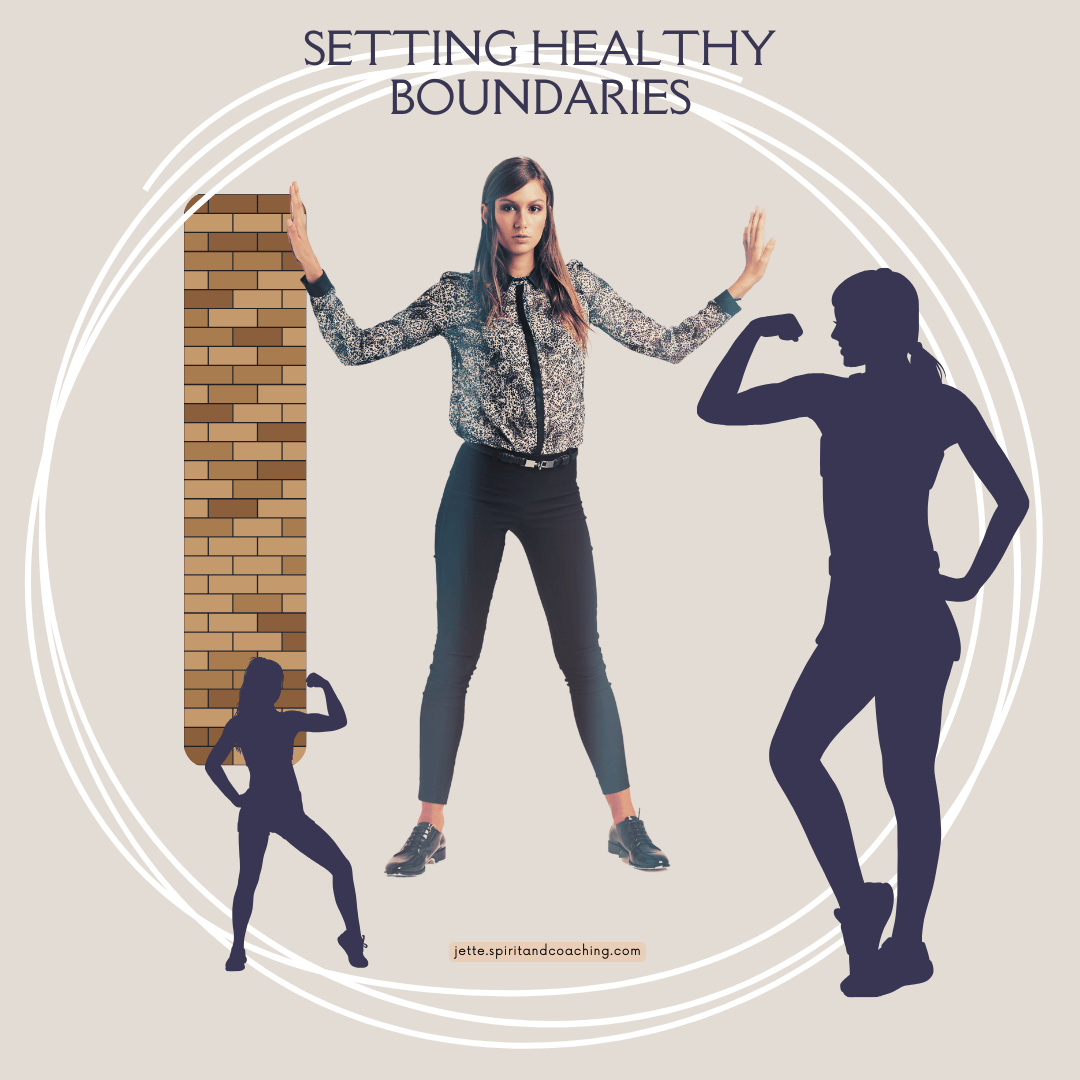
Considering the potential for more disadvantages than advantages in being a "nice person," if you aspire to lead an authentic life and become the empowered individual you deserve to be, prioritizing the establishment of healthy boundaries is crucial.


setting-boundaries-for-your-confidence-jette-hofmann

Setting Boundaries is Crucial for Your Own Happiness

From overwhelm to freedom! If you set no or too few boundaries, other people will probably be very happy, while you will be very dissatisfied with yourself. Your self-esteem plummets and you constantly feel drained.

If, on the other hand, you maintain your own boundaries and make them clear to others - without arguing or discussing - then you reach a point of inner strength and a feeling of freedom that you never knew before.


It's important to recognize that people don't automatically know what you need, but you have to make it clear in a neutral and specific way.

Setting effective boundaries from one day to the next isn't easy - it's a learning process. Some people won't be happy that you're suddenly setting clear boundaries. Others can find it surprisingly easy to set boundaries and appreciate it. These people are well-suited to healthy relationships. Others who want the old version of you back and make your life difficult are simply too stressful and take up too much energy.


AND Setting Boundaries is Crucial for Your Relationships


Can't you tell anything in your family or relationship without it either getting worse, being ignored, causing drama, or being immediately redirected to the other person(s)?

“Who takes time for my concerns and needs?” “Why can’t I ever talk about myself?” “Why doesn’t anyone care about me?” If you ask yourself these questions frequently or regularly, for legitimate reasons, you may be facing unbalanced, toxic, or narcissistic relationships.

What you should know about it:

  • It's basically not your fault. The person is either not sensitive enough to understand your needs or is so dysregulated that your every request upsets them - like many other things.
  • In healthy relationships, everyone can express their feelings and solutions are found together without anger outbursts.
  • It may be necessary to set clear boundaries to make it clear to others how you want to be treated, what you will and will not tolerate.
  • It's very possible that relationships characterized by power struggles are not right for you.
  • Maybe you now realize that your relationships are one-sided: maybe you give 90% and the other person(s) only give 10% or even less?

If your relationships are unbalanced, if other people take generously and you're always giving, then it's time to think again. Healthy boundaries are the be-all and end-all of healthy relationships. If people don't respect your boundaries despite repeated attempts, it may be time to "let go."

the-secret-to-setting-healthy-boundaries-coachng-jette-hofmann

The Secret to Setting Healthy Boundaries

The secret to healthy boundary setting lies in the principles of "stick with it!" and "keep going!" It is not possible to set boundaries overnight that will be respected by everyone immediately.


One indicator of successful boundary setting is when you no longer feel guilty. At first, your conscience may still hesitate and fuel fears that are not real.

It is important to understand that these are simply your thoughts getting used to the new boundaries where you now say "no" or no longer accept certain things.


Stay consistent, because "practice makes perfect!" - that's really true!


Over time, people will automatically get used to your boundaries. They will be happy to know what is acceptable and what is not. Your charisma will show that you stand firmly within your boundaries.

As others sense how you think and feel about yourself, it becomes easier to set boundaries.


It is important to work on it continuously and see it as a natural process that helps you protect yourself and strengthen your relationships.

strong-boundaries-protection-jette-hofmann

Setting Strong Boundaries Protects you

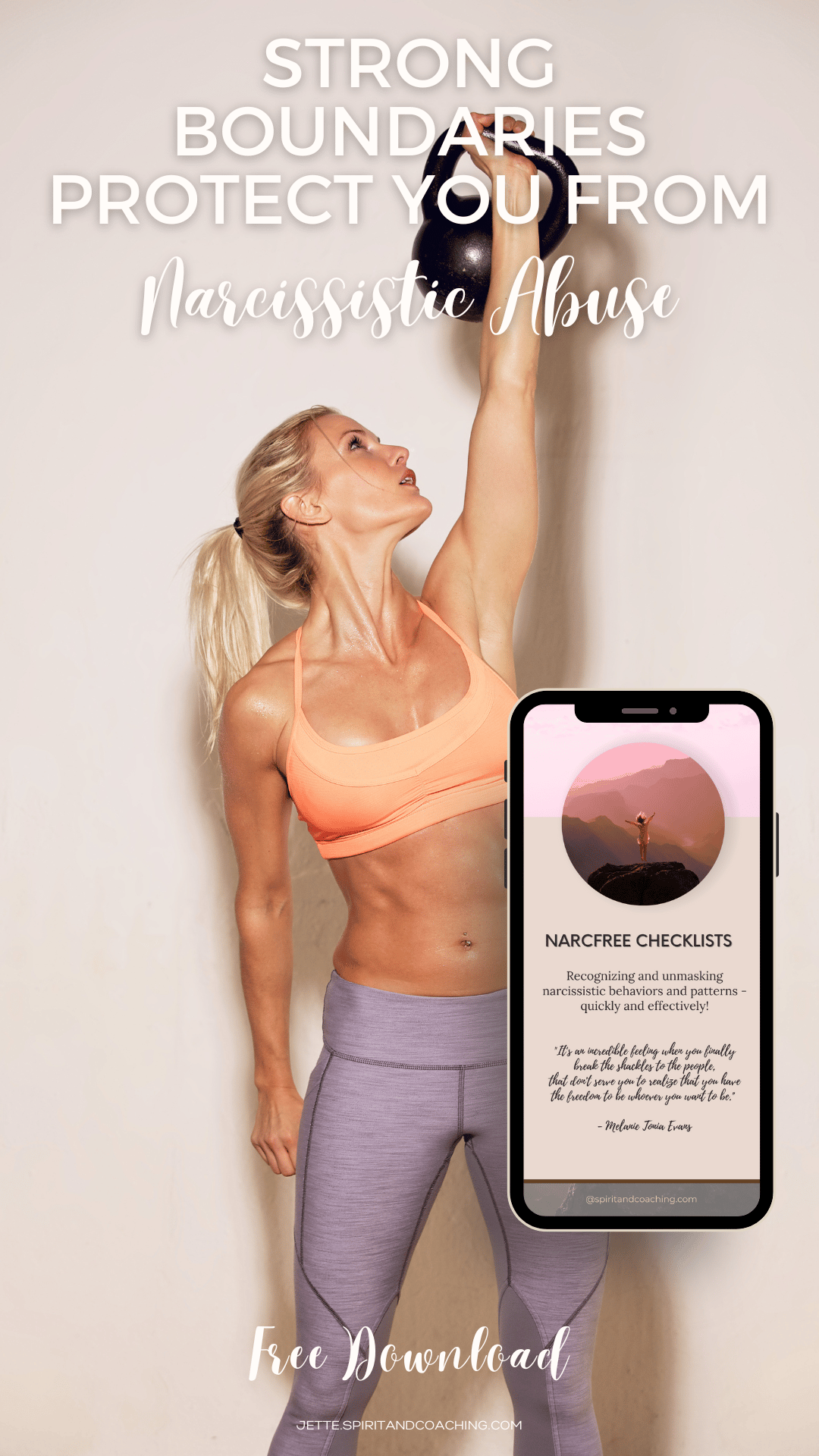
How is it that strong boundaries protect us from narcissistic abuse? Well, narcissists try everything to break down our boundaries so that they can make us "compliant".


If we don't set boundaries and let them do "anything" with us, narcissists have an easy game. They exploit people who have no boundaries because they have stored beliefs that are strongly influenced by other people.


If you believe that you are not good enough or have always heard "Who do you think you are?" when you have tried to pursue your own interests, then you have been programmed to please others.


Narcissists have a "nose" for this. They test people in the first 1-3 encounters to see how far they can go. If you have strong boundaries and don't let yourself be bent but are authentic to yourself, narcissists can't do anything because they are powerless against it.


Otherwise, however, after the initial short test phase, they immediately start playing their games of distortion and confusion. It doesn't take long before you're hooked. Once you're hooked, you get caught in the narcissistic cycle and getting out of it is firstly not easy and secondly it can take up a lot of time.


So it's better to learn to set boundaries, that saves valuable time and quality of life.

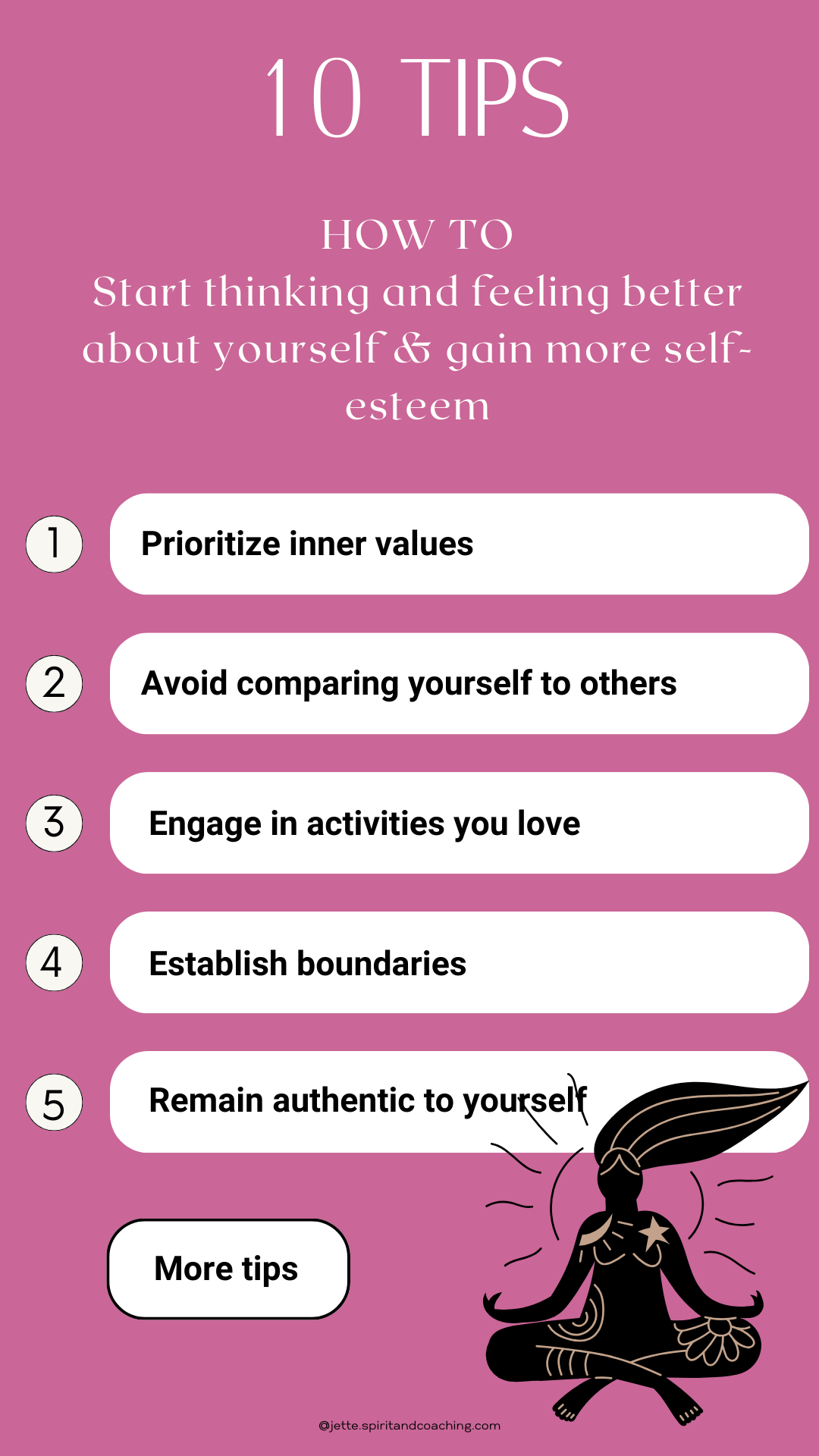
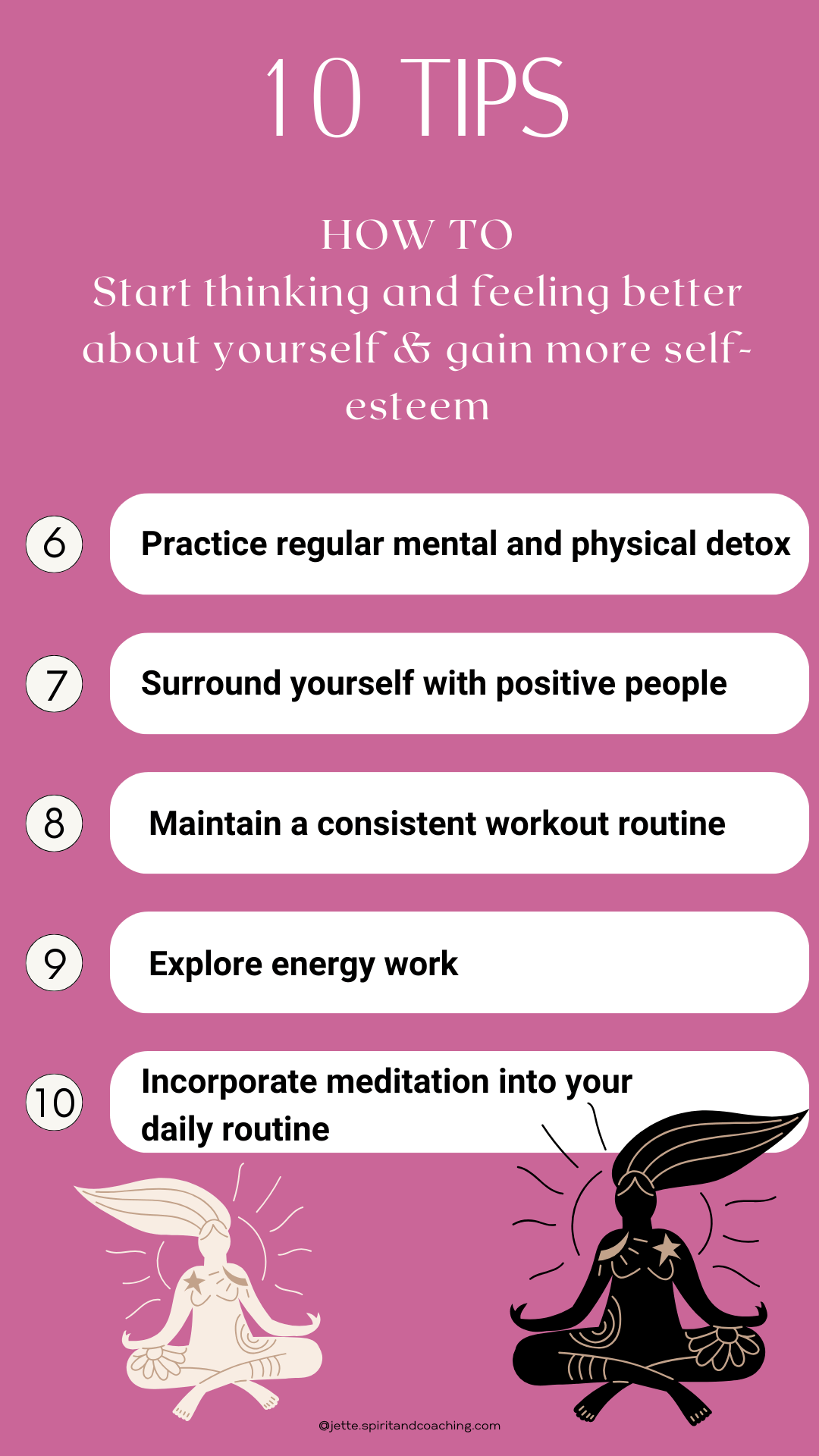
10 Tips how to Start thinking and feeling better about yourself & gain more self-esteem

“People feel what you feel about you”, says Aaron Doughty. It's a fact: If you harbor negative feelings about yourself, others are likely to sense this energy and reflect it back to you. Remember, it's all about energy, so you have the power to influence how others respond to you.


Feeling good about oneself is crucial for mental and emotional well-being. When we have a positive self-image, we are more likely to have higher self-esteem, confidence, and resilience in facing life's challenges. This positive self-perception can lead to healthier relationships, improved performance in various areas of life, and a greater sense of overall happiness and fulfillment.


It also enables us to set boundaries, make healthier choices, and pursue our goals with determination and positivity. Ultimately, self-acceptance and self-love are essential for personal growth and living a fulfilling life.


Here are 10 tips to improve your self-esteem and your self-perception:

  1. Prioritize inner values
  2. Avoid comparing yourself to others
  3. Engage in activities you genuinely love
  4. Establish boundaries and only agree to things you truly want
  5. Remain authentic to yourself
  6. Practice regular mental and physical detoxification
  7. Surround yourself with positive individuals
  8. Maintain a consistent workout routine
  9. Explore energy work
  10. Incorporate meditation into your daily routine

How you think and feel about yourself has a lot to do with your perception and your inner values. If you try to live up to other people's values, you won't feel fulfilled. What are your own values? It's important to align your values ​​with what brings you fulfillment and what makes you truly happy. What others think is completely unimportant.

11-reasons-for-setting-strong-boundaries-jette-hofmann

11 Reasons for Setting Firm Boundaries

We have to show people where our limits are. Most people are not empathetic. So they don't automatically know when they're going too far. And narcissists in particular don't give a damn about our lives or our concerns.


As long as we don't set boundaries, we will be exploited. But we are not doormats for everyone to trample on; we deserve to be treated with respect.


Therefore we have to set limits. Most people with empathy first have to learn how to set boundaries. But practice makes perfect!" Don't give up prematurely or give in lightly. Stay strong and express your boundaries neutrally, i.e. without becoming emotional.


Most people don't like being told “no,” but they can learn to accept it. When you no longer have any doubts that you can set boundaries, then others understand that too and the energy comes across much stronger. At some point it will be natural for you to set boundaries.

Setting firm boundaries is crucial for maintaining healthy relationships and personal well-being.


Here are 11 reasons why establishing and enforcing boundaries is important:


1.) Self-Respect: Setting boundaries demonstrates self-respect, conveying that your needs and values are important. This, in turn, fosters respect from others.


2.) Healthy Relationships: Clearly defined boundaries contribute to the development and maintenance of healthy relationships. They create a framework for mutual understanding and cooperation.


3.) Personal Well-Being: Boundaries protect your mental and emotional well-being. They help prevent burnout and ensure that you allocate time and energy to self-care.


4.) Effective Communication: Establishing boundaries enhances communication. When expectations are clear, misunderstandings are less likely, leading to smoother interactions.


5.) Empowerment: Setting and enforcing boundaries empowers you to take control of your life. It helps you make choices that align with your values and priorities.


6.) Avoiding Exploitation: Boundaries prevent others from taking advantage of your kindness or overstepping personal limits. They serve as a line of defense against manipulation or coercion.


7.) Conflict Resolution: Clearly defined boundaries can aid in resolving conflicts. When both parties understand each other's limits, it becomes easier to find compromise and common ground.


8.) Work-Life Balance: Boundaries are essential for maintaining a healthy work-life balance. They help prevent work from encroaching on personal time, ensuring a more fulfilling and sustainable lifestyle.


9.) Increased Productivity: Well-defined boundaries enhance focus and productivity. By setting limits on distractions and interruptions, you can maximize your efficiency and output.


10.) Emotional Stability: Boundaries provide a sense of emotional stability. They create a safe space for expressing feelings and needs without fear of judgment or invasion.


11.) Personal Growth: Establishing boundaries is a fundamental aspect of personal growth. It requires self-awareness and the willingness to prioritize your values, fostering continual development and resilience.


In summary, setting firm boundaries is not only about protecting yourself but also about fostering healthier relationships and creating an environment conducive to personal growth and fulfillment.

setting-boundaries-quotes-jette-hofmann
FREE "Narcfree Checklists" - Workbook
On Sale
€12.50
Free Download
Added to cart

Hello dear Narcfree visitors!


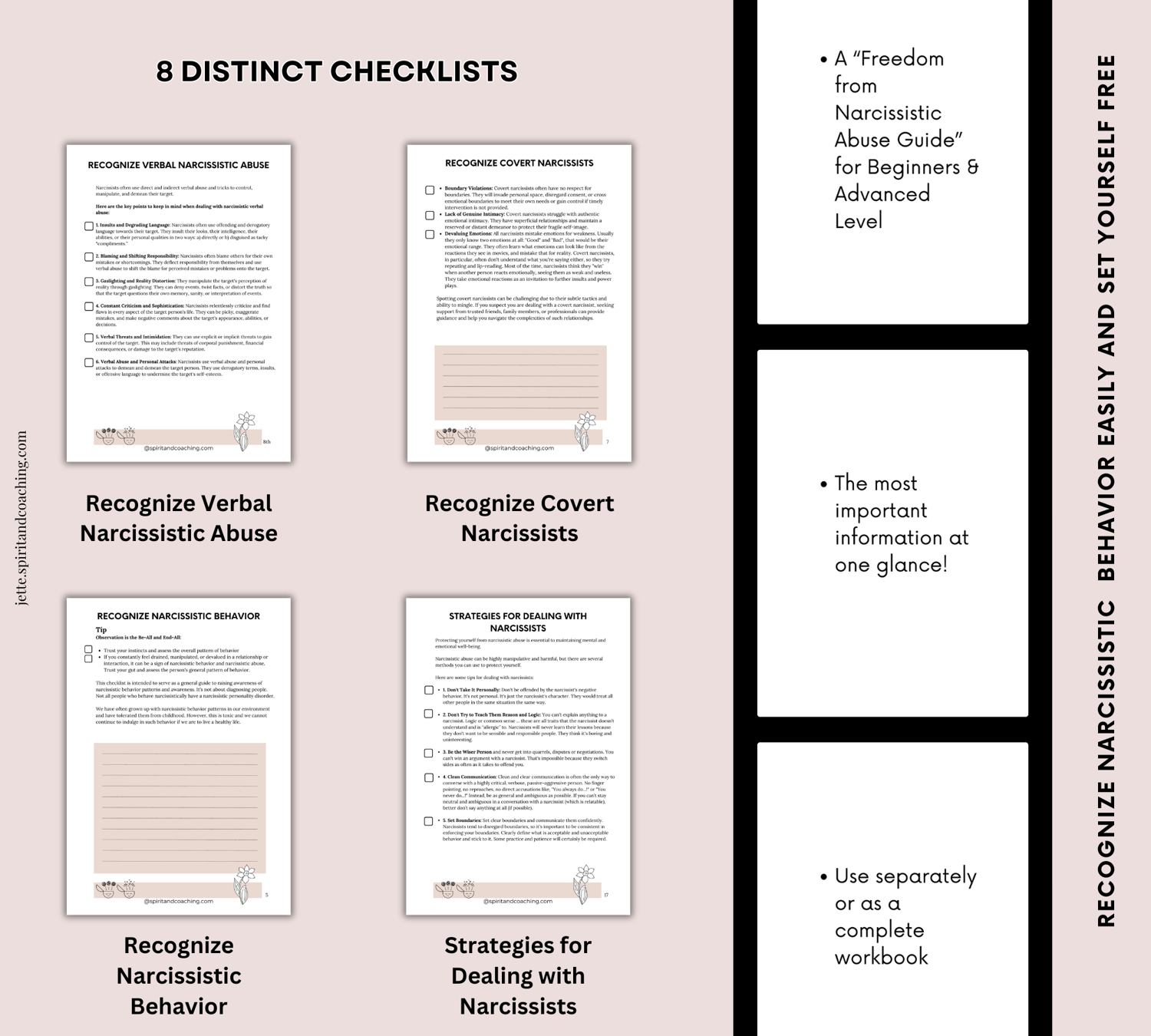
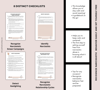
We have put together this booklet to help you quickly and effectively identify narcissistic behavior, narcissistic people, and toxic relationships.


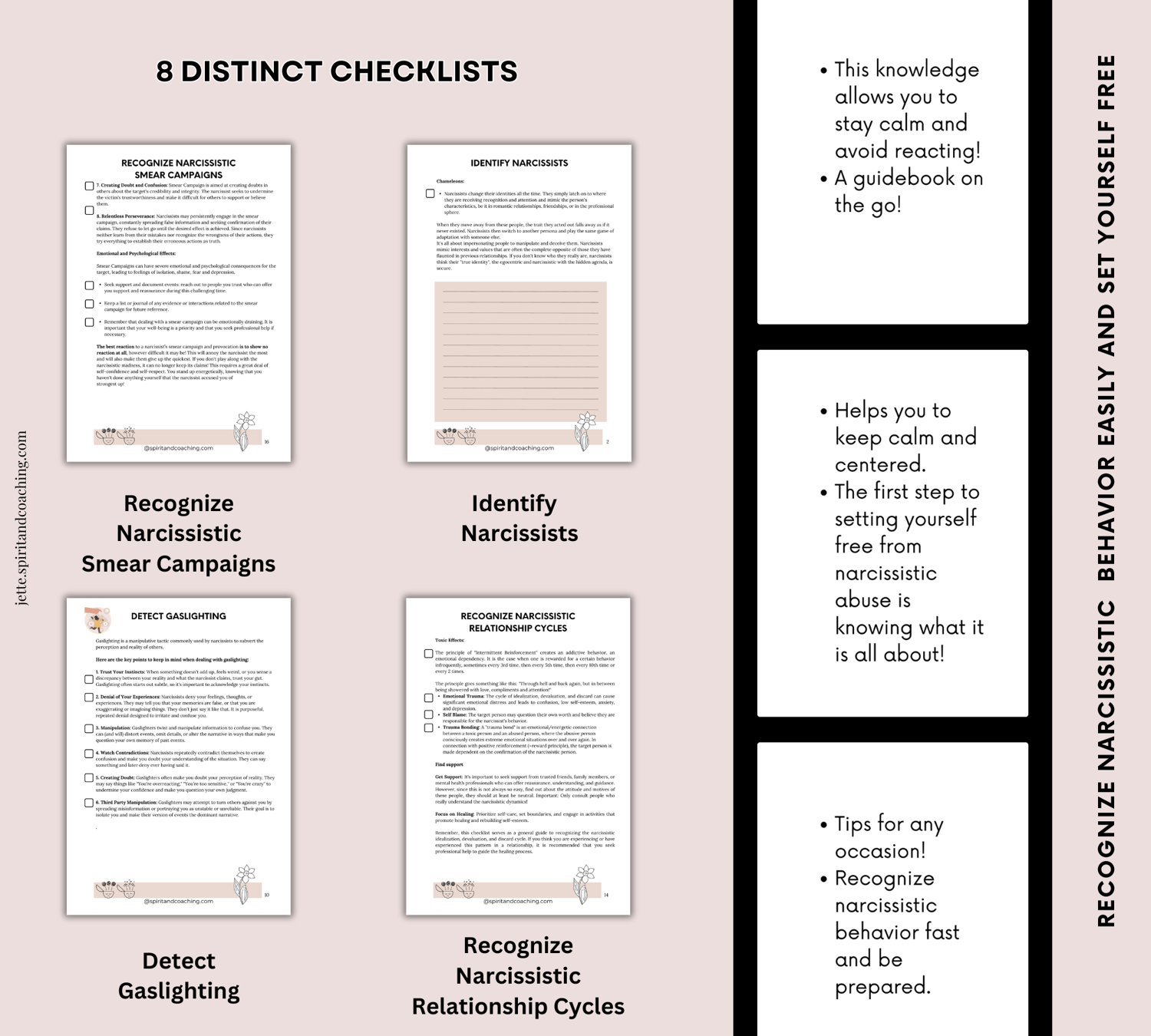
The booklet consists of 8 lists that can be used independently of each other, so that you don't have to read through all the pages first, but can start directly with the topic that is important to you.


Our Narcfree lists will help you become aware of narcissistic behaviors around you. This is the first step towards liberation and healing. You can't break free, if you don't know what you're dealing with. When dealing with narcissists in any way, you inevitably have to find yourself in difficult situations, as narcissists are always trying to trigger you and make your life difficult in different ways.


When we begin to recognize that we are dealing with people who have ulterior motives and do not have our highest good in mind, we can begin to see clearly what we really want. Do we really want to keep being humiliated and oppressed? Do we want to be held down and have our energy, power, and self worth stolen just to make a narcissist feel good? Hardly likely


We've compiled these lists to help you gain clarity and dispel doubts about manipulation issues that are often difficult to spot.


"Narcfree Checklists"


... Are made for you, so that you are always well prepared, because narcissists not only become uncomfortable when you expect them, but rather when you are unsuspecting.


Just when you no longer think about it, narcissists put out their quills. Especially then "Narcfree Checklists" are of great value. You can withdraw for a moment and look up the "Narcfree Checklists" on your mobile phone or tablet to quickly gain clarity. What you should avoid is also written down in the checklists.

When dealing with narcissists, your own mental clarity is the top priority! This will help you not to get drawn into narcissistic games and to remain your sovereignty.


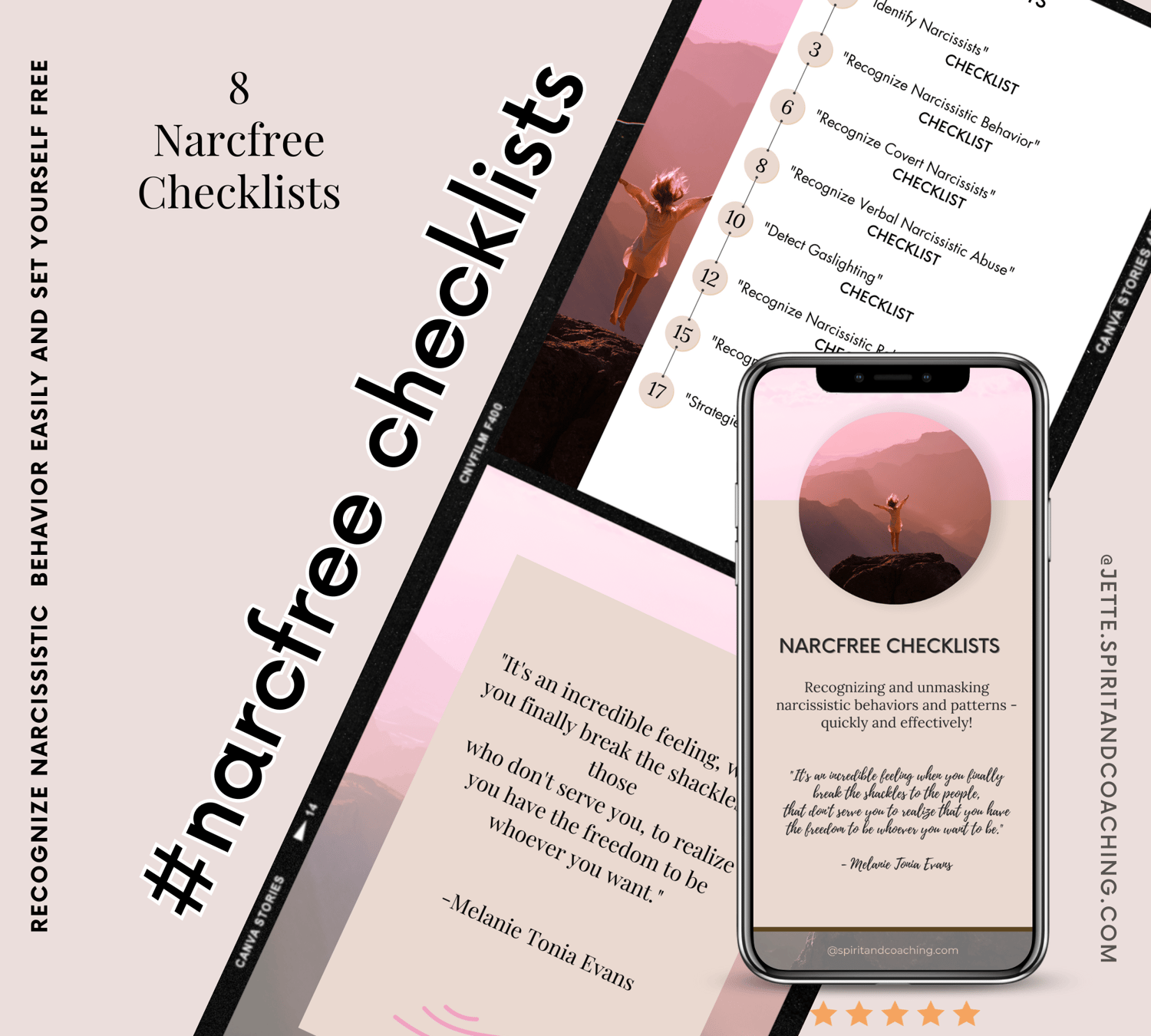
The workbook contains the following checklists:


  • Identify Narcissists
  • Recognize Narcissistic Behavior
  • Recognize Covert Narcissists
  • Recognize Verbal Narcissistic Abuse
  • Detect Gaslighting
  • Recognize Narcissistic Relationship Cycles
  • Recognize Narcissistic Smear Campaigns
  • Strategies for Dealing with Narcissists


We have often grown up with narcissistic behavior patterns in our environment and have tolerated them from childhood. However, this is toxic and we cannot continue to indulge in such behavior if we are to live a healthy life.


When it comes to narcissistic abuse, the motto is, "No, it's not your fault!" The narcissist just wants you to think and even believe that! But you don't have to do that anymore.


You can also read and use our lists on your mobile phone, so that you always have them at hand, wherever you are. PDF files can be uploaded and labeled on Goodnotes and other apps.


Whenever a way of communicating or behaving seems odd to you, go through the lists that are appropriate. They are designed for different situations so that they provide extensive support for you.

If you have any further questions, send us an email or book a Narcfrei consultation with us.


You are worthwhile!


We wish you every success and good luck 🍀🍀 on your journey to self-determination!


Sincerely,


Jette & team


You receive:


  • 1 Workbook consisting of 8 checklists, 21 pages - digital download
  • 1 PDF file with very high quality
  • 1 PDF file with standard quality


This checklist workbook is intended to serve as a general guide to raising awareness of narcissistic behavior patterns. It's not about diagnosing people. Not all people who behave narcissistically have narcissistic personality disorder.


Copyright:

Please note that you are not permitted to resell or distribute any of our digital products, templates, design assets, icons, or any of their components in any manner. It's important to recognize that all designs are copyrighted.


© Jette A. Hofmann


You will get the following files:
  • PDF (39MB)
  • PDF (10MB)

Setting Healthy Boundaries

Setting healthy boundaries can lead to conflicts within ourselves and with other people. But is this really necessary?


Why is it often so hard to set boundaries with some people while others naturally respect them?


For sure, interacting with other people can be a balancing act, especially when we deal with "difficult" people. While communication can never be 100% perfect, you can't do anything right in the eyes of narcissists. They challenge us to gain strength and stand our ground in very uncomfortable ways.


And why can it sometimes be so hard to set healthy boundaries?

1.) We haven't learned it

Most people haven't learned how to set healthy boundaries. In families with healthy structures, setting boundaries is learned naturally, but not in dysfunctional families.

In dysfunctional relationships, we learn not to set boundaries so that we are controllable and manipulable. We are supposed to willingly allow others to overrun us and use us as a target. This makes it very easy for toxic people to deal with us. They encounter no resistance and can push us around at will.

We learn that we are seen as bad, cheeky, or mean when we say "this far and no further!" or even say "No!" It simply wasn't accepted.

As a result, when we finally start setting boundaries, they are not respected because it doesn't come from within. This means that the energy with which we set a boundary does not match the words.

We can find good words, but people only understand "Go ahead with what you want, continue manipulating..." because the energy feels too weak.


2.) We are afraid of doing something wrong

Growing up in a dysfunctional family with narcissists usually means walking on eggshells. You are constantly on dangerous ground because someone could emotionally "explode" at any moment.

Therefore, setting boundaries with toxic people is not an easy task. They not only appear difficult but also make it hard for us.

But just because someone does not react positively to your boundaries does not automatically mean you did it wrong.

Just because some people feel threatened when you say no and set boundaries does not mean you should stop. People are often very comfortable. They want to control and manipulate us like a remote control, especially if they exhibit toxic tendencies.


3.) We don't want to hurt anyone

If Mom always reacted insulted when you said what you wanted to do or not do what she wants, it feels like you've hurt her. Especially if she emotionally withdraws or even starts crying as soon as you set a boundary.

Children in dysfunctional families are often made to feel responsible for the well-being and feelings of their parents. "See, because of you, Mom is crying now!" ... Groan... How often have I heard that? Or: "Children are there for their parents!" Yes, that's how it really was 😀

If our subconscious was programmed in this way, we automatically feel a huge guilt when we want to maintain our boundaries, just at the thought of it.

If toxic family members or guardians have frequently emotionally manipulated us and played on guilt, we naturally fear hurting someone when setting boundaries. Even if we know it shouldn't be the case, the subconscious programming often prevails.

It is then crucial to gather courage and keep practicing setting boundaries. This involves stepping out of our comfort zone, which builds more self-confidence. With practice, it becomes easier to successfully set boundaries.


4.) We are afraid of the negative reaction

People with toxic tendencies often label us as rude and selfish when we set boundaries. They often shout at us and punish us if we don't "function."

Additionally, they simply turn the tables and insult us, making us feel like bad people. This is how narcissists prefer to do it. They intentionally make us feel like we are abandoning them when we set healthy boundaries.

Some may claim that we are stupid or disrespectful when we stand up for ourselves. This is nothing but manipulation.

People who feel attacked by clear boundaries and are intimidated lack healthy self-esteem and do not value the emotions of others. All that matters to them is that their needs are met around the clock.

If you leave the room because of gaslighting and aggression from the toxic person, they immediately twist the facts and claim that it's your boundaries that caused the problem. Or they simply say you are the problem, typical behavior from narcissists.

They love to claim that you are abandoning them or not loving them.


5.) We don't know how to go about it

Since we haven't learned it and have experienced unnecessary unhealthy reactions from adults or those who claim to be adults, it's only natural to feel insecure when it comes to setting boundaries.

How do you set boundaries without causing conflicts? It's really not easy, and sometimes it simply can't be done without conflicts. Healthy people understand you, toxic people do not understand and do not respect you.


The simplest method is often the most effective:


  • Think carefully about what you want to say beforehand.
  • Politely and neutrally state the boundary you are setting, for example: "I am going away for the weekend and do not want anyone to use my computer in the meantime."
  • Say what you will do if this boundary is not respected. For example: "If my computer is still used without my permission during this time, I will not bring it home anymore."
  • Don't feel guilty!
  • Say it kindly and clearly, without using "You." Phrases like "You are not allowed" or "You did...!" feel like an attack to most people.
  • Do not explain why you are setting the boundary, as this gives contrary narcissistic people the opportunity to negotiate and break down the boundaries.

Anyone who reacts insulted by setting clear boundaries is probably not emotionally mature enough.


Setting healthy boundaries is an emotionally mature action!


Narcissistic people often perceive boundaries as prohibitions, and they do not tolerate prohibitions for themselves. Therefore, they often do exactly what they are not supposed to do, even more so. If this happens repeatedly, there is often no need for discussion, but leaving the relationship may be the only solution.


Where does it come from?

Most people are not capable of self-reflection. Emotional maturity, personal responsibility, or inner stability are foreign to them. They have not matured emotionally.


Therefore, in short, they do not possess the emotional maturity for a secure, healthy relationship.


It is crucial to recognize when toxic individuals try to distort the facts by claiming that you are the problem just because you demand a minimum of respect, politeness, and consideration.

Emotionally mature individuals can naturally maintain these healthy boundaries and find it neither bothersome nor disrespectful.


People with healthy self-esteem find it respectful when someone says, "These are my boundaries!" It is a sign of strength and self-respect that they will definitely uphold.


Setting healthy boundaries only leads to conflicts with people who do not possess this emotional maturity. Dysfunctional relationships are therefore extremely conflict-ridden, while the individuals involved are simultaneously conflict-averse. This seems contradictory, but humans are often very paradoxical. Everything they try to avoid, they automatically bring about.


What to do?

It is especially important not to give up. Success comes to those who gather courage repeatedly and frequently practice setting boundaries.


By continually stepping out of our comfort zone, we can build more self-confidence. With practice, it becomes increasingly easier to successfully set boundaries.


"The journey is the destination!"


setting´-energetic-boundaries-the-frame-technique-jette-hofmann

How to Set Emotional Boundaries Easily

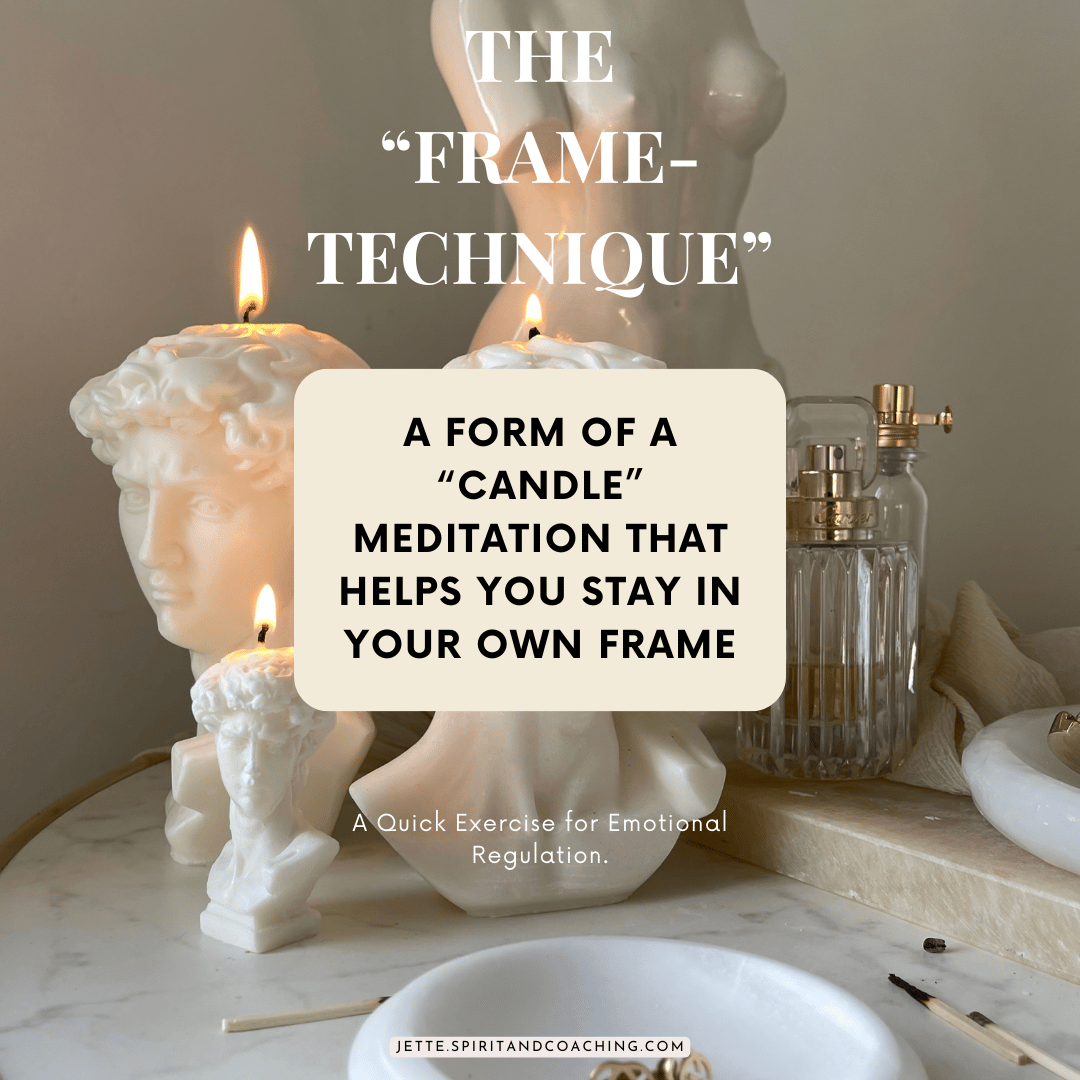
The "Frame Technique"

is a mindfulness and meditation practice often used by empaths and individuals seeking to center themselves and protect their energy from being overly influenced by others. It's a form of focused meditation that can help empaths establish boundaries and maintain a sense of emotional and energetic balance.


Here's how you can practice the frame technique:


  1. Find a quiet, comfortable space where you won't be disturbed.
  2. Light a candle and place it at eye level in front of you, so you can easily focus on it.
  3. Sit in a relaxed and upright posture. You can sit in a chair or on the floor, whichever is more comfortable for you.
  4. Take a few deep breaths to center yourself and calm your mind.
  5. Gaze at the flame of the candle. Focus your attention on the flickering flame and try to clear your mind of other thoughts.
  6. As you watch the flame, visualize a protective, energetic frame or boundary forming around you. This frame can be made of light, energy, or any material that feels protective to you.
  7. While maintaining your focus on the candle flame, imagine this frame expanding and encircling you, creating a protective barrier between you and the external energies and emotions of others.
  8. As you continue to breathe deeply and maintain your concentration on the candle and the protective frame, affirm to yourself that you are safe and protected from negative or overwhelming energies.
  9. Stay in this meditative state for as long as you feel comfortable, usually for at least a few minutes. You can gradually extend the practice as you become more experienced.
  10. When you're ready to finish, gently blow out the candle and take a few moments to reflect on the sense of protection and inner peace you've cultivated during the practice.


The frame technique is a way for empaths to create a mental and energetic boundary that can help prevent them from absorbing the emotions and energies of others. It's a mindfulness practice that can be incorporated into your daily routine or used whenever you feel the need to shield yourself from external influences.

15 "Setting Boundaries" Quotes

  1. "You have the right to set boundaries. You don't need anyone's permission to do so." - Melody Beattie
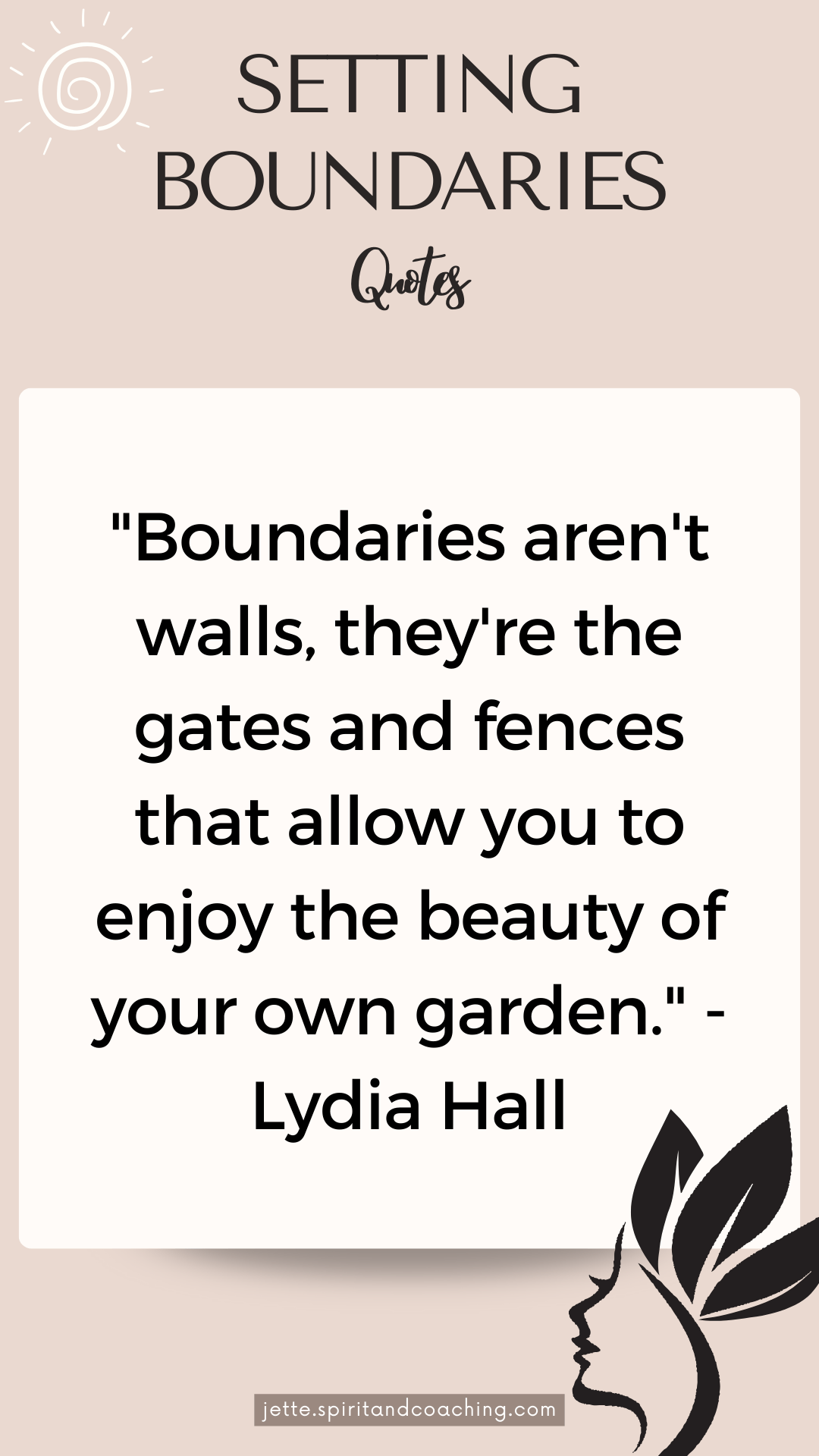
  2. "Boundaries aren't walls, they're the gates and fences that allow you to enjoy the beauty of your own garden." - Lydia Hall
  3. "When we fail to set boundaries and hold people accountable, we feel used and mistreated." - Brené Brown
  4. "The difference between successful people and really successful people is that really successful people say no to almost everything." - Warren Buffett
  5. "Setting boundaries is a way of caring for myself. It doesn't make me mean, selfish, or uncaring because I don't do things your way. I care about me too." - Christine Morgan
  6. "If you do what you always did, you will get what you always got." - Albert Einstein
  7. "The only people who get upset when you set boundaries are the ones who benefited from you having none." - Unknown
  8. "You teach people how to treat you by what you allow, what you stop, and what you reinforce." - Tony Gaskins
  9. "The most powerful way to teach respect for others is to show respect for yourself." - Unknown
  10. "Boundaries are a part of self-care. They are healthy, normal, and necessary." - Doreen Virtue
  11. "The greatest thing in the world is to know how to belong to oneself." - Michel de Montaigne
  12. "Boundaries are not a sign of selfishness. They are a sign of self-respect." - Unknown
  13. "The only way to set boundaries with difficult people is to first acknowledge your own worthiness." - Unknown
  14. "It is not about being selfish, it is about being self-aware." - Unknown
  15. "Setting boundaries is not a more sophisticated way of manipulation - although some people will say they are setting boundaries, when in fact they are attempting to manipulate." - Unknown